
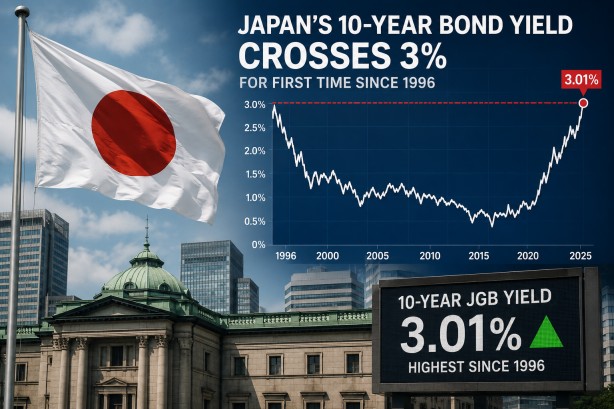
For the first time since 1996, Japan’s benchmark 10-year government bond yield has surpassed 3%, signaling a significant transformation in the nation’s bond market and bolstering the attractiveness of domestic fixed-income assets. This development is prompting Japanese investors to reassess their overseas bond investments, which may lead to a reversal of the traditional flow of Japanese capital into international debt markets. Official data indicates that through August 22, Japanese investors have already seen a net outflow of ¥3 trillion ($18.7 billion) from foreign debt this year.
The rise in domestic yields is enhancing the competitiveness of Japanese bonds, especially as the costs associated with currency hedging diminish the returns from foreign investments. In line with this shift, a survey conducted among 82 Japanese corporate pension funds revealed the strongest net intention to increase domestic bond holdings since the survey’s inception in 2008. This trend is noteworthy for global financial markets, given that Japanese investors have long been significant buyers of U.S. Treasuries and other sovereign debts. A continued decrease in their overseas acquisitions could exert upward pressure on international bond yields and borrowing expenses.
Factors driving the increase in Japanese yields include concerns over inflation, anticipated rate hikes by the Bank of Japan, and growing unease regarding Japan’s fiscal situation. Despite these pressures, analysts suggest that the current movement is likely to reflect a gradual reallocation towards domestic assets instead of an abrupt large-scale retreat from foreign markets.
The potential shift in investment strategy among Japanese investors holds considerable implications for the global economy. As one of the largest groups of international debt purchasers, changes in their buying habits could influence borrowing costs worldwide. The dynamics within Japan’s bond market are being closely monitored as they may herald broader trends in investor behavior, not just within Japan but across international markets as well.