
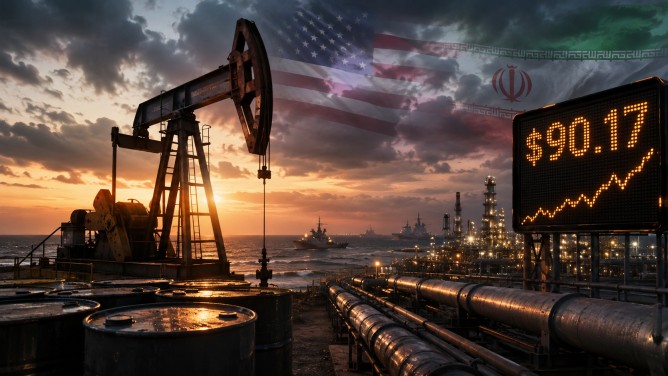
In a significant development for global energy markets, oil prices surged as negotiations between the United States and Iran concluded without reaching a peace agreement. The expiration of the two-month dialogue period has reignited concerns about the potential continuation of conflict, potentially exacerbating disruptions to global oil supplies. Brent crude, a major benchmark for oil pricing, soared past $90 a barrel, hitting approximately $91.63, marking its highest point since July 30.
This price rally follows U.S. President Donald Trump’s stern ultimatum for Iran to surrender, accompanied by a cautionary statement regarding the possible escalation of the conflict should diplomatic efforts falter. The situation has drawn increased attention to the Strait of Hormuz, a vital corridor for global oil transportation. Notably, the volume of commercial vessels navigating this strategic waterway has dwindled, heightening fears of sustained supply chain disruptions.
Adding to the geopolitical tension, Iran has hinted at adopting a more assertive military posture if negotiations collapse. Recent reports of an attack on a cargo ship transiting the strait have further intensified apprehensions about the security and safety of maritime passage in the region.
For investors, this uncertainty has prompted a reassessment of the potential for prolonged disruptions in oil supply. Any extended closure or reduction in traffic through the Strait of Hormuz is likely to exert additional upward pressure on crude oil prices.
Analysts are cautioning that the ongoing conflict in the Middle East, coupled with the war in Ukraine, could deliver further shocks to global energy markets. Such instability has the potential to drive oil and gas prices higher, impacting economies and consumers worldwide.