
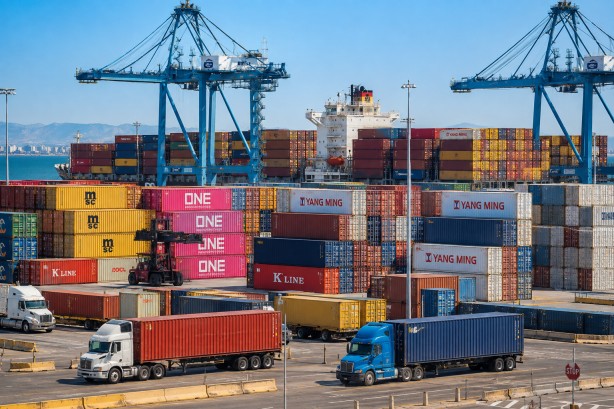
The U.S. government has recently refunded about $100 billion in tariffs that had been collected as part of the trade measures introduced under President Donald Trump’s administration. This refund follows a Supreme Court ruling that deemed a significant portion of these tariffs unlawful. The refunded sum accounts for roughly 60% of the $165 billion collected prior to the court’s decision. These tariffs, initially imposed on imported goods, were a key element of Trump’s trade strategy, which sought to enhance domestic manufacturing, secure advantageous trade agreements, and boost government revenue.
As a result of the Supreme Court’s decision, the administration has begun returning the collected tariffs to the affected companies. Despite these refunds, the federal budget deficit continues to widen, reaching $1.37 trillion in the first nine months of the fiscal year. The financial strain highlights the ongoing challenges the government faces in balancing trade policies with fiscal responsibilities.
In a related development, last month saw the Trump administration announce a fresh wave of tariffs, ranging from 10% to 12.5%, on imports from over 80 countries, including major trading partners like India, China, the United Kingdom, Canada, Mexico, Australia, and the European Union. These new tariffs have been justified by the administration as necessary to address concerns over products linked to forced labor.
However, these latest tariffs have encountered immediate legal challenges. A coalition of 25 U.S. states has filed a lawsuit aiming to block the new measures. They argue that these tariffs unlawfully serve as replacements for those previously struck down by the Supreme Court. The legal battle underscores the contentious nature of the administration’s trade policies and the ongoing debate over their legality and economic impact.