
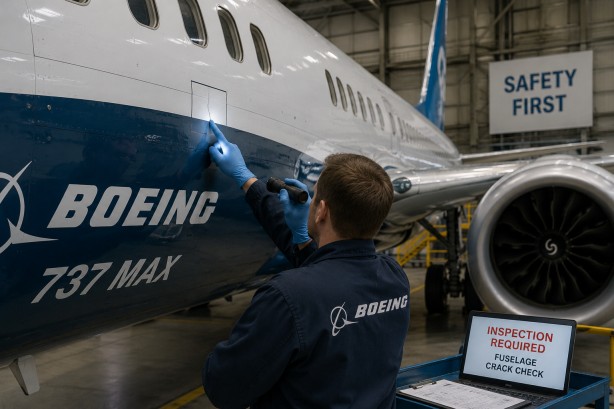
The Federal Aviation Administration has mandated inspections for Boeing 737 Max aircraft to check for potential cracks in a critical structural component of the fuselage, known as the bear strap. This directive will impact approximately 471 aircraft, with inspections slated to commence in September. The bear strap is essential for supporting the fuselage around the exit doors, and cracks in this component were previously identified in older Boeing 737 Next Generation models, leading to similar inspections for those aircraft.
While no cracks have been detected in the 737 Max fleet so far, regulators have noted that the design and manufacturing processes are similar to those of the Next Generation planes, raising the possibility of the same structural issue occurring. The FAA cautioned that undetected cracks could undermine a significant structural element of the aircraft, potentially compromising its overall integrity.
Boeing has been proactively addressing this concern with airlines since the issue was first identified in 2019 and is in full support of the mandated inspections. The objective of these checks is to detect and repair any emerging problems before they escalate to critical levels. This precautionary measure is part of Boeing’s commitment to ensuring the safety and reliability of its aircraft.
The inspection requirement comes amid persistent scrutiny of the 737 Max, which has been under the microscope following previous safety-related incidents and questions about its manufacturing and engineering standards. The aircraft model was grounded globally after two tragic crashes that occurred in 2018 and 2019, which led to comprehensive evaluations of its safety features and operational protocols.