
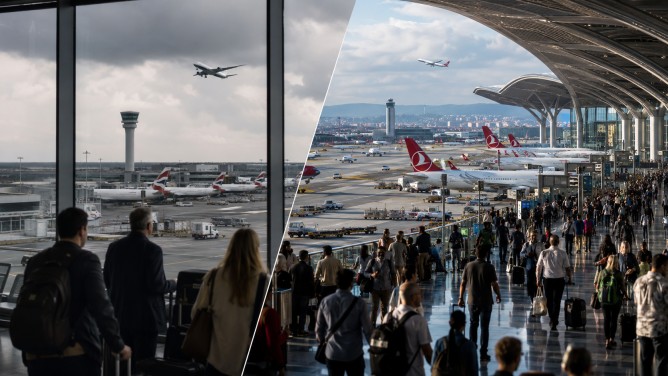
Istanbul Airport has surpassed Heathrow Airport as Europe’s busiest airport, with July figures showing Istanbul handled 8.15 million passengers, compared to Heathrow’s 7.86 million. This shift marks a significant development in airport rankings, as Heathrow contends with a 1.5% decrease in passenger numbers from last year. Meanwhile, Istanbul experienced a 2.3% increase, partially due to its more extensive facilities and round-the-clock operations.
The drop in Heathrow’s passenger traffic is partly attributed to disruptions stemming from the ongoing conflict in the Middle East, which has further intensified the call for infrastructure upgrades at the UK airport. The proposed third runway at Heathrow, which would be part of a £33 billion expansion project, aims to boost annual capacity to approximately 150 million passengers, addressing current capacity challenges faced by its two nearly full-capacity runways.
Heathrow officials argue that the latest passenger figures underscore the urgent need for additional capacity to bolster the UK’s international connectivity, trade, and tourism. The expansion is considered crucial to maintain the airport’s competitive edge and accommodate future growth in air travel demand.
On the other hand, Istanbul Airport, which began operations in 2018, boasts a more expansive site and currently operates three runways, with a fourth slated to become operational by the end of 2026. This strategic advantage contributes to its ability to handle a larger volume of passengers and solidify its position as a key aviation hub.
Amid these developments, other UK airports like London Stansted and Manchester have reported their busiest Julys on record, with passenger numbers reaching 3.1 million and 3.4 million, respectively. These figures highlight the overall growth in air travel demand within the UK, despite the challenges faced by Heathrow in maintaining its status as Europe’s leading airport.